9 min read / Bikal Shrestha & TrekGuard Team /
Nepal Dropped the Two-Person Rule for Manaslu. Most Guides Online Still Say Otherwise.
On 22 March 2026 the Department of Immigration removed the two-trekker minimum for restricted area permits. A licensed guide is still mandatory, and the guide-to-trekker ratio quietly went from 1:5 to 1:7. What that means on the Manaslu Circuit.
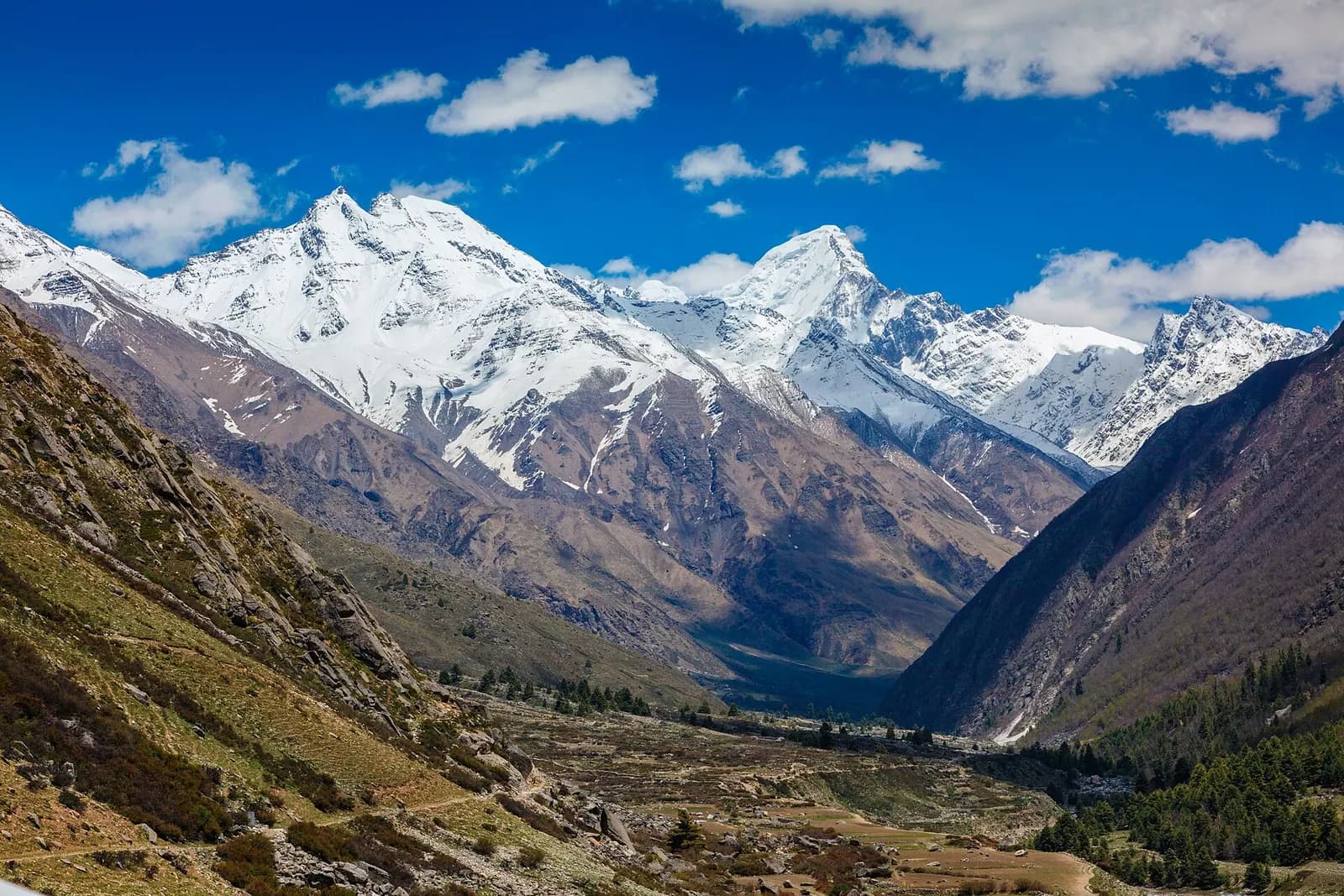
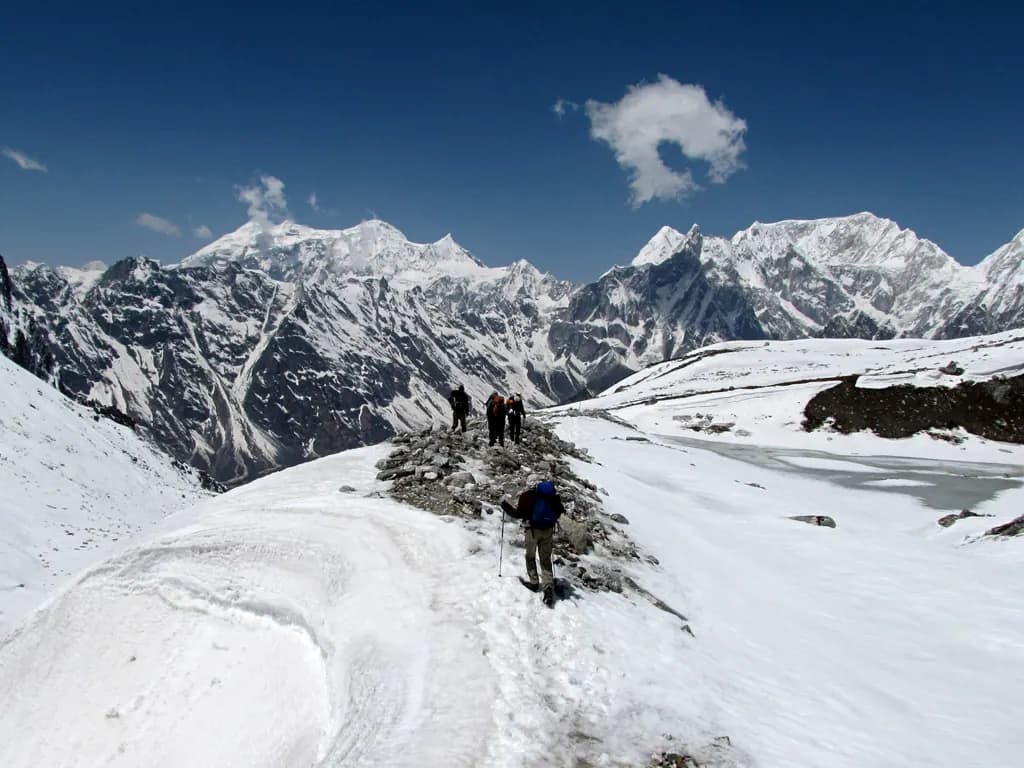
Photo: Spencer Weart / CC BY-SA 3.0
Quick Summary
TL;DR - Key Takeaways
- On 22 March 2026 Nepal's Department of Immigration, under the Ministry of Home Affairs, removed the long-standing requirement that at least two foreign trekkers apply together for a restricted area permit.
- This covers the restricted areas generally, including Manaslu, Upper Mustang, Dolpo and Kanchenjunga. A single foreign trekker can now hold a restricted area permit in their own name.
- A licensed guide is still mandatory, and you still cannot apply yourself. The permit is issued through a registered trekking agency in Kathmandu. Solo now means you and your guide, not you alone.
- The less-reported half of the change: the guide-to-trekker ratio moved from one guide per five trekkers to one per seven. On a route with a 5,106 m pass and no road, that is a real reduction in supervision.
- Large parts of the trekking web still state that solo trekking in Manaslu is prohibited and a minimum of two is required. Those pages are out of date, and some of them are current-looking 2026 permit guides.
What Changed, and On What Date
For years, the rule on Nepal's restricted areas was firm and widely quoted. A foreign trekker could not obtain a restricted area permit alone. You needed a minimum of two foreign trekkers on one permit application, plus a licensed guide, plus a registered agency. People solved it by paying an agency to add a phantom second name, which was expensive, awkward and not exactly legal.
On 22 March 2026, the Department of Immigration, under the Ministry of Home Affairs, issued a notice removing the two-person minimum. A solo foreign trekker can now apply for and hold a restricted area trekking permit in their own name.
The change applies across Nepal's restricted areas, which include the Manaslu region, Upper Mustang, Dolpo and Kanchenjunga: the belt of restricted districts running along the northern border.
For the Manaslu Circuit specifically, this removes the single largest administrative obstacle a solo trekker faced. It does not turn the route into an independent trek.
What Did Not Change, Which Is Most of It
The word "solo" is doing a lot of misleading work in the coverage of this change. Read the rule precisely.
A licensed guide is still mandatory. Every restricted area still requires you to walk with a licensed trekking guide. There is no version of this where you walk the Manaslu Circuit by yourself.
You still cannot apply directly. Restricted area permits are not issued to individuals over a counter. The application still goes through a government-registered trekking agency in Kathmandu, and the agency still holds the paperwork.
The conservation area permits are unchanged. You still need the Manaslu Conservation Area Permit, and the Annapurna Conservation Area Permit as well, because the circuit exits into the Annapurna Conservation Area at Dharapani.
So what actually changed is narrow but real: the cost and the friction. A solo trekker no longer needs to find a trekking partner, join a group they did not want to join, or pay an agency to invent a second person. They book a guide, the agency files the permit in their name, and they walk.
That is worth being clear about because the difference between "solo trekking is now allowed in Manaslu" and "a solo trekker can now hold a permit, still accompanied by a mandatory guide" is the difference between a headline and the rule.
What the Permits Cost
The permit structure did not change with the rule. What changed is that one person can now carry it. Costs for foreign nationals:
The restricted area permit is the seasonal one, and the daily rate after the first week is the part people miss when planning a longer itinerary. A standard 14-day Manaslu Circuit spends roughly a week inside the restricted zone, so most trekkers land near the base figure, but a slower schedule or a Tsum Valley extension adds days at the daily rate.
TIMS is not required for the Manaslu Circuit on its own. Our Nepal trekking permits guide covers how these stack across regions.
| Permit | Cost | Notes |
|---|---|---|
| Manaslu Restricted Area Permit, September to November | USD 100 for the first 7 days, then USD 15 per day | Peak season rate. Issued only through a registered agency in Kathmandu |
| Manaslu Restricted Area Permit, December to August | USD 75 for the first 7 days, then USD 10 per day | Off-peak rate |
| Manaslu Conservation Area Permit | NPR 3,000 | Fixed year-round |
| Annapurna Conservation Area Permit | NPR 3,000 | Required because the route exits at Dharapani inside the Annapurna Conservation Area |
| TIMS card | Not required | Not needed for the Manaslu Circuit alone |
The Change Nobody Is Writing About: One Guide, Seven Trekkers
Alongside the permit change, the guide-to-trekker ratio moved from one guide per five trekkers to one guide per seven.
This got almost no coverage, and it deserves more than the permit change did, because it points the opposite way.
Think about what a guide is for on this particular route. Not navigation, mostly. It is noticing that the client at the back has stopped talking. It is recognising ataxia at 4,460 m in the dark. It is making the call to turn a group around on the pass, and then actually managing a descent with one person who cannot walk properly while six others are cold and exposed at altitude.
One guide can do that for five people. Seven is a different job.
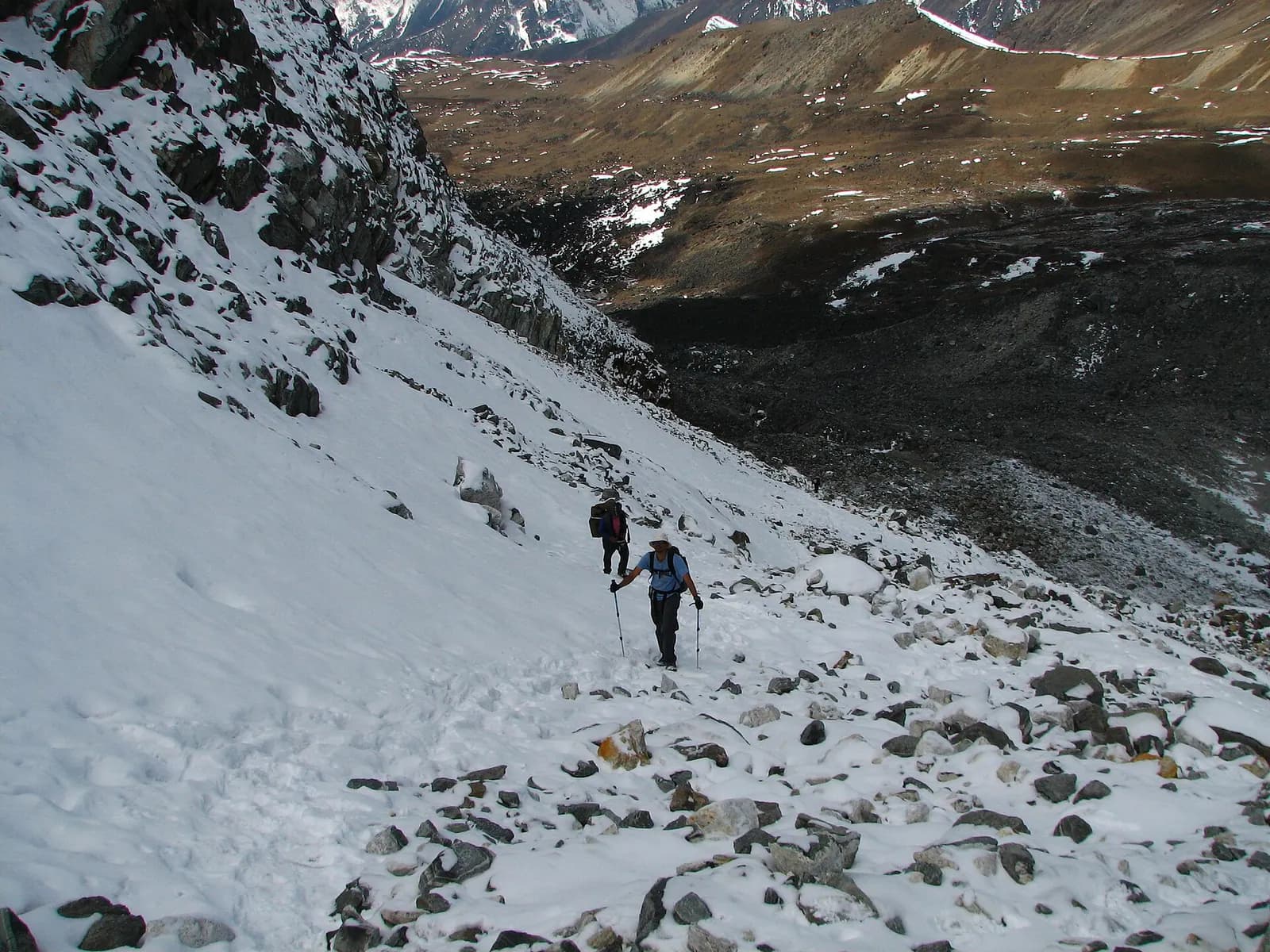
The Manaslu Circuit's crux is the crossing from Dharamsala at 4,460 m over Larke La at 5,106 m to Bimthang at 3,720 m: around 18 km and nine hours, started before dawn to get across before the afternoon wind. On that day a group spreads out over hours. A ratio of one to seven means the guide is structurally unable to be with everyone.
If you are booking a group departure, the ratio is now a question worth asking out loud. If you are booking as a solo trekker under the new rule, you have accidentally bought the best ratio available, which is one to one.
None of this is an argument against the rule change. It is an argument for knowing which of the two changes actually affects your safety, and it is not the one in the headlines.
Why Manaslu Punishes Being Under-Supported
The Manaslu Circuit is a serious route dressed in a friendly reputation as the quieter alternative to Annapurna.
It is a 14-day schedule with a net sleeping-altitude gain of about 3,530 m from Machha Khola to Dharamsala. It crosses a pass at 5,106 m. Above Namrung the villages are small and far apart, mobile coverage is patchy to absent, and there is no road running alongside to evacuate you down. On the northern half of the loop your realistic options after an injury are a helicopter, if the weather allows one, or a long walk out.
The ascent profile has two nights that exceed the standard 500 m sleeping-gain limit: Namrung to Samagaon at 870 m, and Samdo to Dharamsala at 600 m. The itinerary answers the first with a rest night at Samagaon and adds a second at Samdo, which is a well-built schedule. The Dharamsala night is the exposed one, because it is a jump of 600 m to 4,460 m immediately before the hardest day of the trek.
That is the context in which supervision matters. Being one of seven on the pass day is a different trek from being one of five, and both are a different trek from being the only client your guide has.
If you are considering the route, the Manaslu Circuit trek guide covers the day-by-day, and our insurance and rescue guide covers what helicopter evacuation cover actually needs to say for a route at this altitude.
How to Tell If You Are Reading Stale Advice
This rule changed in March 2026 and a large amount of trekking content has not caught up. Some of the out-of-date pages are titled as 2026 permit guides and read as current.
The reliable test is simple. If a page tells you that solo trekking in a restricted area is prohibited and that a minimum of two trekkers is required, it predates 22 March 2026 regardless of the year in its title. Check anything else on that page with more suspicion, particularly permit prices.
Two practical steps before you book:
Confirm with the agency filing your permit. The change is implemented through the agencies and the immigration office, so the agency handling your application is the authority on how it is being applied this season.
Do not assume it changed the guide requirement. If an agency offers you a genuinely unguided Manaslu Circuit, that is not the new rule. That is somebody planning to break the old one, and you would be the person standing at the checkpoint at Jagat.
Permit rules in Nepal move more than most trekkers expect, and they move between the time you research a trek and the time you walk it. TrekGuard ships permit and route data with the app and updates it, so what you carry into a valley with no signal reflects the current rules rather than whatever a blog said in the spring.
Frequently Asked Questions
Can you trek the Manaslu Circuit solo in 2026?
You can now hold a restricted area permit as a single trekker, following the Department of Immigration's change of 22 March 2026, which removed the two-person minimum. You still cannot walk it alone. A licensed trekking guide remains mandatory in all restricted areas, and the permit must still be issued through a registered trekking agency in Kathmandu.
What exactly did Nepal change about restricted area permits?
The requirement that at least two foreign trekkers apply together for a restricted area permit was removed on 22 March 2026 by the Department of Immigration under the Ministry of Home Affairs. It applies across the restricted areas, which include Manaslu, Upper Mustang, Dolpo and Kanchenjunga. The mandatory guide requirement and the agency application process were not changed.
How much does the Manaslu Circuit permit cost?
The Restricted Area Permit is USD 100 for the first seven days plus USD 15 per day thereafter from September to November, and USD 75 for the first seven days plus USD 10 per day from December to August. On top of that, the Manaslu Conservation Area Permit is NPR 3,000 and the Annapurna Conservation Area Permit is another NPR 3,000, needed because the route exits at Dharapani. A TIMS card is not required for this trek alone.
Did the guide-to-trekker ratio change too?
Yes. It moved from one guide per five trekkers to one guide per seven. This received far less attention than the permit change but has a more direct effect on safety, particularly on the Larke La crossing day, where a group spreads out over many hours at above 5,000 m. If you book a group departure, ask what the actual ratio on your date will be.
Why do so many websites still say solo Manaslu trekking is banned?
Because the rule changed in March 2026 and much trekking content has not been updated since, including pages presented as current 2026 permit guides. A useful test: any page stating that a minimum of two trekkers is required predates the change, and its other details, especially prices, deserve checking against the agency handling your permit.