10 min read / Bikal Shrestha & TrekGuard Team /
Larke La: The Hardest Day on the Manaslu Circuit, Hour by Hour
The crossing from Dharamsala at 4,460 m over Larke La at 5,106 m to Bimthang is 18 km and around nine hours. It has less climbing than Thorong La and is harder. Here is why, when to start, and where the turnaround point actually is.
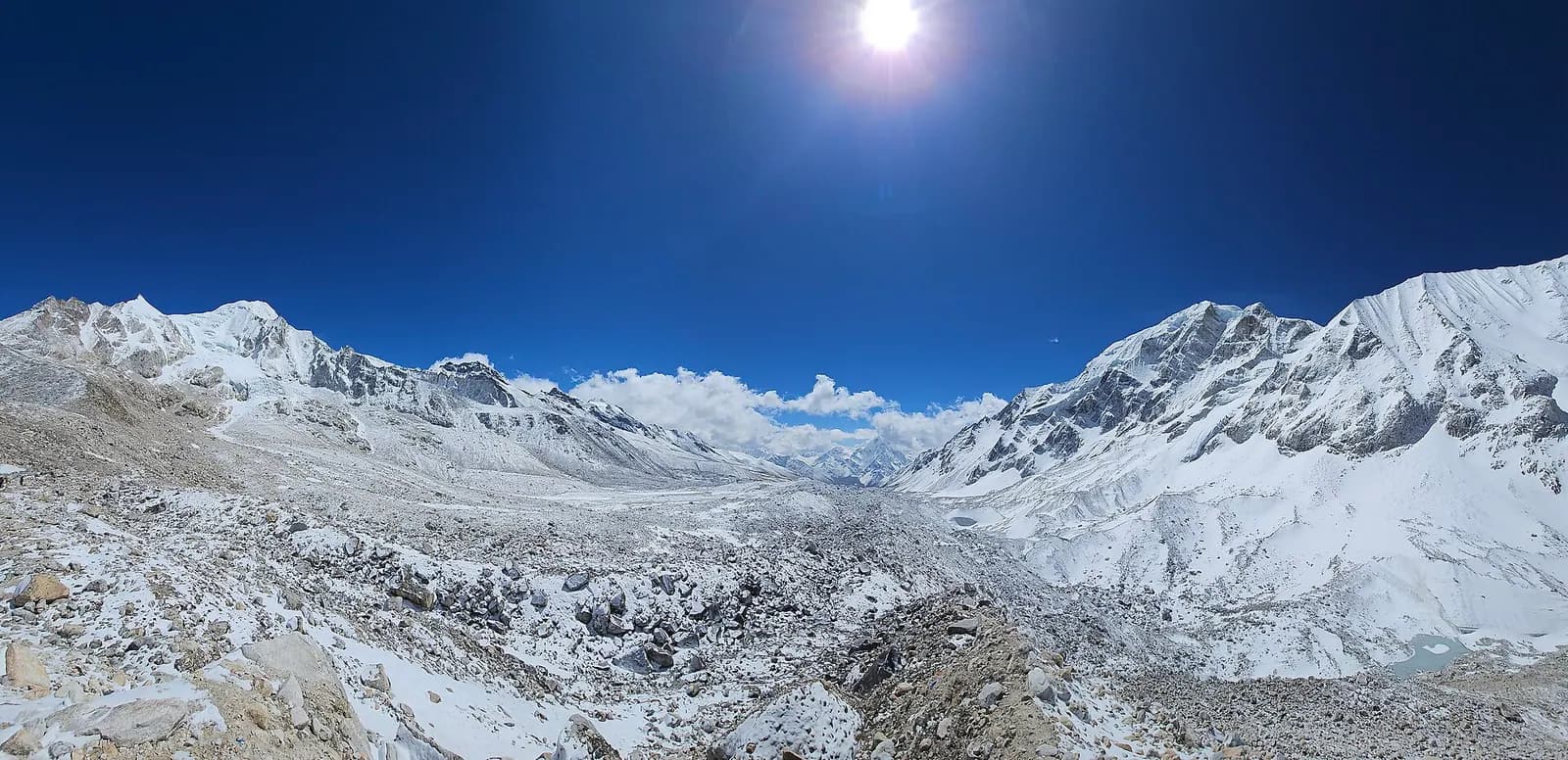
Photo: Nabin K. Sapkota / CC BY-SA 4.0
Quick Summary
TL;DR - Key Takeaways
- Larke La sits at 5,106 m and is the highest point of the Manaslu Circuit. The crossing runs from Dharamsala at 4,460 m to Bimthang at 3,720 m: roughly 18 km and nine hours of walking.
- The climb is only 646 m. The descent is 1,386 m. More than twice as much of this day is spent going down as going up, and that is where people get hurt.
- Guides start between 3 and 4 in the morning. The reason is wind: the pass gets significantly windier through the afternoon, and the long descent needs to be finished in daylight.
- Compared with Thorong La at 5,416 m, Larke La has less climbing and a lower summit, but it is longer, takes an hour more, and ends at Bimthang, which has no road. Thorong La ends at Muktinath, which does.
- The turnaround point is the pass itself. Below it you can retreat to Dharamsala. Above it, the only way out is 1,386 m of descent to Bimthang.
The Day in Numbers
Nearly every account of the Manaslu Circuit describes the Larke La crossing as the hardest day, and nearly none of them say why. It is not the altitude, and it is definitely not the climb.
Here it is next to the pass most trekkers use as their reference point, Thorong La on the Annapurna Circuit.
Two things jump out of that table. Larke La is 310 m lower than Thorong La and asks for 320 m less climbing, yet it takes an hour longer. And on both passes, the descent is far larger than the ascent, which is the single most under-appreciated fact about high pass days in Nepal.
| Larke La (Manaslu Circuit) | Thorong La (Annapurna Circuit) | |
|---|---|---|
| Pass altitude | 5,106 m | 5,416 m |
| Start point | Dharamsala, 4,460 m | Thorong Phedi, 4,450 m |
| End point | Bimthang, 3,720 m | Muktinath, 3,760 m |
| Climb to the pass | 646 m | 966 m |
| Descent from the pass | 1,386 m | 1,656 m |
| Distance | 18 km | 15 km |
| Walking time | About 9 hours | About 8 hours |
| Road at the far side | No. Bimthang is a walk from anywhere | Yes. Muktinath is road-connected |
Why 646 m of Climbing Is the Wrong Way to Read This Day
If you plan the Larke La day around the ascent figure, you will plan it wrong. Three things make the number misleading.
You start already high. The 646 m of climbing begins at 4,460 m, not at sea level. Above 5,000 m most people are working at a fraction of their normal pace, and a gradient that would be trivial at home takes real effort. Time on this day is governed by altitude, not by gradient.
The descent is the long half. Getting down 1,386 m to Bimthang is more of the day than the climb, and it is the part done on legs that have already been walking for hours in thin air. Descent is where ankles roll, where knees fail and where people slip on snow. On any high pass day in Nepal, the injuries cluster after the summit, not before it.
The far side is remote. The descent from Larke La drops into an upper valley that is a long way from anything. Bimthang has no road, and the day after this one is another 22 km and roughly seven hours to Dharapani, dropping a further 1,860 m. If something goes wrong on the descent you are managing it, not driving away from it.
This is why an hour more than Thorong La for less climbing is not a contradiction. The Larke La day is longer, more remote and more descent-heavy. That is the whole difficulty.
Why Guides Leave at Three in the Morning
The standard departure from Dharamsala is between 3 and 4 a.m. Trekkers often assume this is padding, or a habit inherited from bigger mountains. It is neither.
Wind. Larke La builds wind through the day, and afternoon conditions on the pass are substantially worse than morning ones. A high, exposed saddle in strong wind at 5,106 m is a place where a manageable day becomes a serious one quickly, and where cold injury moves from theoretical to real. Starting early means crossing the pass while it is still relatively calm.
Daylight for the descent. With around nine hours of walking, a 3 a.m. start puts you into Bimthang with margin. A 6 a.m. start puts you on a 1,386 m descent in fading light, which is the worst combination available on this route.
Slack for problems. Someone in the group will be slow, or will need to stop, or will need to turn back with the assistant guide. That decision is survivable at 8 a.m. and much less so at 2 p.m.
What this asks of you practically: a headlamp with fresh batteries and a spare set, everything packed the night before, water that has not frozen overnight, and clothing you can put on and take off without stopping for long. It will be genuinely cold leaving Dharamsala in the dark at 4,460 m, and you will be too warm within ninety minutes of climbing. Both are normal.
The Night Before Is Part of the Crossing
Dharamsala, also known as Larkya Phedi, the foot of the pass, is the last stop before the crossing and it is a high, exposed place rather than a village with options.
You arrive there having gained 600 m of sleeping altitude from Samdo at 3,860 m. Measured against the standard guidance of no more than 500 m of sleeping gain per night above 3,000 m, that is over the limit, and it lands the night before the hardest day of the trek. It is the single exposed night in an otherwise well-built schedule, and the Manaslu Circuit itinerary earns it by putting two rest nights below, at Samagaon at 3,530 m and Samdo at 3,860 m.
That matters because the decision about whether to cross tomorrow is mostly made tonight, not at 3 a.m. Things to be honest about at Dharamsala:
Score yourself before sleeping. A headache at 4,460 m the evening before a 5,106 m pass is information you must act on. The Lake Louise Score turns it into a number. Three or more points with a headache is acute mountain sickness, and the correct response to that at Dharamsala is not to cross a pass in the morning.
Eat and drink even without appetite. Suppressed appetite is a normal altitude effect and the day ahead needs the fuel.
Assume you will sleep badly. Periodic breathing at this altitude is common and disrupted sleep before the pass is the norm rather than a warning sign in itself.
Ask what the plan is if someone turns back. Who goes down with them, and to where. If the answer is vague, get a better answer before you are on the mountain. This is where the guide-to-trekker ratio, changed in 2026 from one guide per five to one per seven, stops being an abstraction.
Where the Turnaround Point Is
On a high pass day the most useful thing you can carry is a decision you made in advance.
Before the pass, retreat is real. Anywhere on the climb from Dharamsala, turning around means descending to Dharamsala and then to Samdo, which is lower, has more shelter and puts you back into the part of the valley you know. This is a bad outcome for your trip and an entirely good one for you.
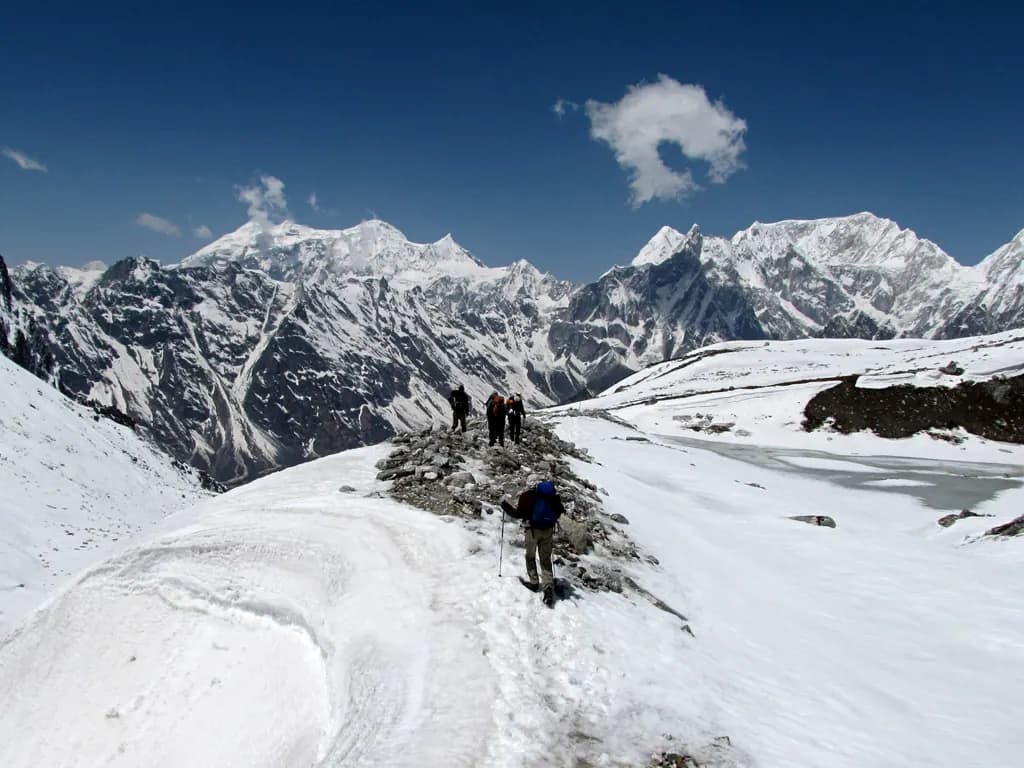
After the pass, there is no retreat. Once you are over Larke La the only way out is forward and down, 1,386 m to Bimthang. Climbing back over a 5,106 m pass to reach the side you came from is not a realistic option for someone who is already unwell.
So the pass is the decision point, and the decision is made on the approach to it, not at it. Set the conditions before you leave Dharamsala:
Turn back if the weather has closed in on the approach. The pass is exposed and visibility on a broad snow saddle disappears fast.
Turn back for altitude symptoms that are getting worse rather than staying flat. A mild headache that is easing as you move is different from nausea and unsteadiness that are building.
Turn back for anything neurological. Loss of coordination, confusion or an inability to walk a straight line is high altitude cerebral edema until proven otherwise, and its treatment is descent, immediately, whatever the schedule says.
Set a time limit. If you are not at the pass by an agreed hour, turn around. A time-based rule is easier to obey than a feelings-based one, because it was made when everyone was warm and thinking clearly.
Season, Snow and When the Pass Closes
Larke La is an autumn and spring crossing. Spring and autumn are the recommended seasons for the route, and there is a reason the shoulder months are not treated as an adventurous option.
In winter, heavy snow and cold make the pass unsafe, and the practical consequence is not merely that it is unpleasant. It is that the pass can hold enough snow to stop a crossing entirely, and the far side offers you nothing if you are caught out. Weather at 5,106 m can also change well inside the nine hours the day takes.
Two things follow.
Check the pass forecast the evening before, and treat it as an input. Mountain forecasts at this altitude are coarse and the pass makes its own weather. A good forecast is a reason to proceed with a normal plan, never a reason to relax a turnaround rule. TrekGuard caches the forecast before you lose signal above Samagaon and marks it plainly as stale rather than showing you a day-old reading as if it were current, which on this day is the difference that matters.
Keep spare days in the itinerary. If fresh snow arrives, the right response is to wait at Samdo or Samagaon. That is only possible if your schedule can absorb it. A trek booked with no slack pushes you across the pass on the day the weather says no, which is exactly how a well-planned trip turns into a rescue.
The full profile, permits and day-by-day are on the Manaslu Circuit route page, and our insurance and rescue guide covers what helicopter cover needs to say for a pass at this altitude with no road on either side.
Frequently Asked Questions
How high is Larke La pass?
Larke La, also written Larkya La, is 5,106 m, which is 16,752 feet. It is the highest point on the Manaslu Circuit and sits between Dharamsala at 4,460 m and Bimthang at 3,720 m.
How long does the Larke La crossing take?
Around nine hours of walking for roughly 18 km, from Dharamsala over the pass to Bimthang. The climb is 646 m and the descent is 1,386 m, so most of the day is spent descending. Groups usually leave between 3 and 4 in the morning to cross before the afternoon wind and to finish the descent in daylight.
Is Larke La harder than Thorong La?
It is longer and more remote, though lower and with less climbing. Larke La is 5,106 m with 646 m of ascent over 18 km and about nine hours. Thorong La is 5,416 m with 966 m of ascent over 15 km and about eight hours. The bigger practical difference is the far side: Thorong La ends at road-connected Muktinath, while Bimthang below Larke La has no road, and the following day is a further 22 km and 1,860 m of descent to Dharapani.
Why do trekkers start Larke La at 3 am?
Wind on the pass builds through the day, and conditions at 5,106 m in the afternoon are significantly worse than in the early morning. The start time also protects the descent, which is 1,386 m and the longer half of the day. A pre-dawn departure means finishing in daylight and leaves time to manage anyone who needs to turn back.
Can you cross Larke La in winter?
It is not recommended. Heavy snow and cold make the pass unsafe in winter, and spring and autumn are the established seasons for the route. Snow can close the crossing outright, and the far side offers no road and no quick exit if conditions deteriorate while you are on it.
What is the turnaround point on the Larke La day?
The pass itself. Anywhere on the climb from Dharamsala you can still descend to Dharamsala and on to Samdo. Once you are over the pass the only route out is 1,386 m down to Bimthang, and reclimbing a 5,106 m pass is not realistic for someone who is unwell. Agree turnaround conditions, including a time limit, before leaving Dharamsala.