10 min read / Bikal Shrestha & TrekGuard Team /
Everest Base Camp Night by Night: Which Sleeps Break the 500 m Rule
Trekking agencies publish Everest Base Camp itineraries as a list of villages. Here is the same 12-day itinerary rewritten as sleeping altitudes, with every night measured against the Wilderness Medical Society's 500 m ascent limit.
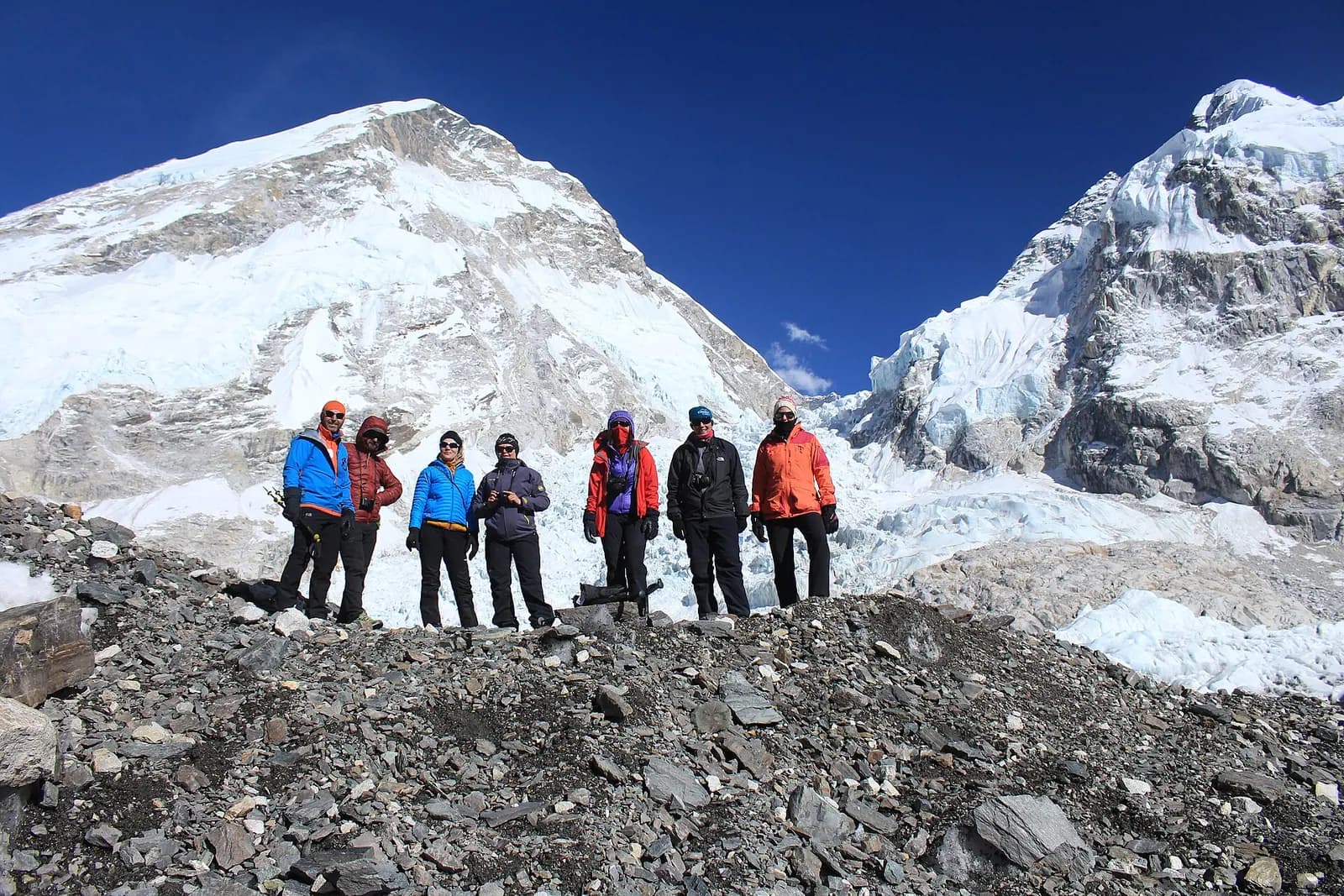
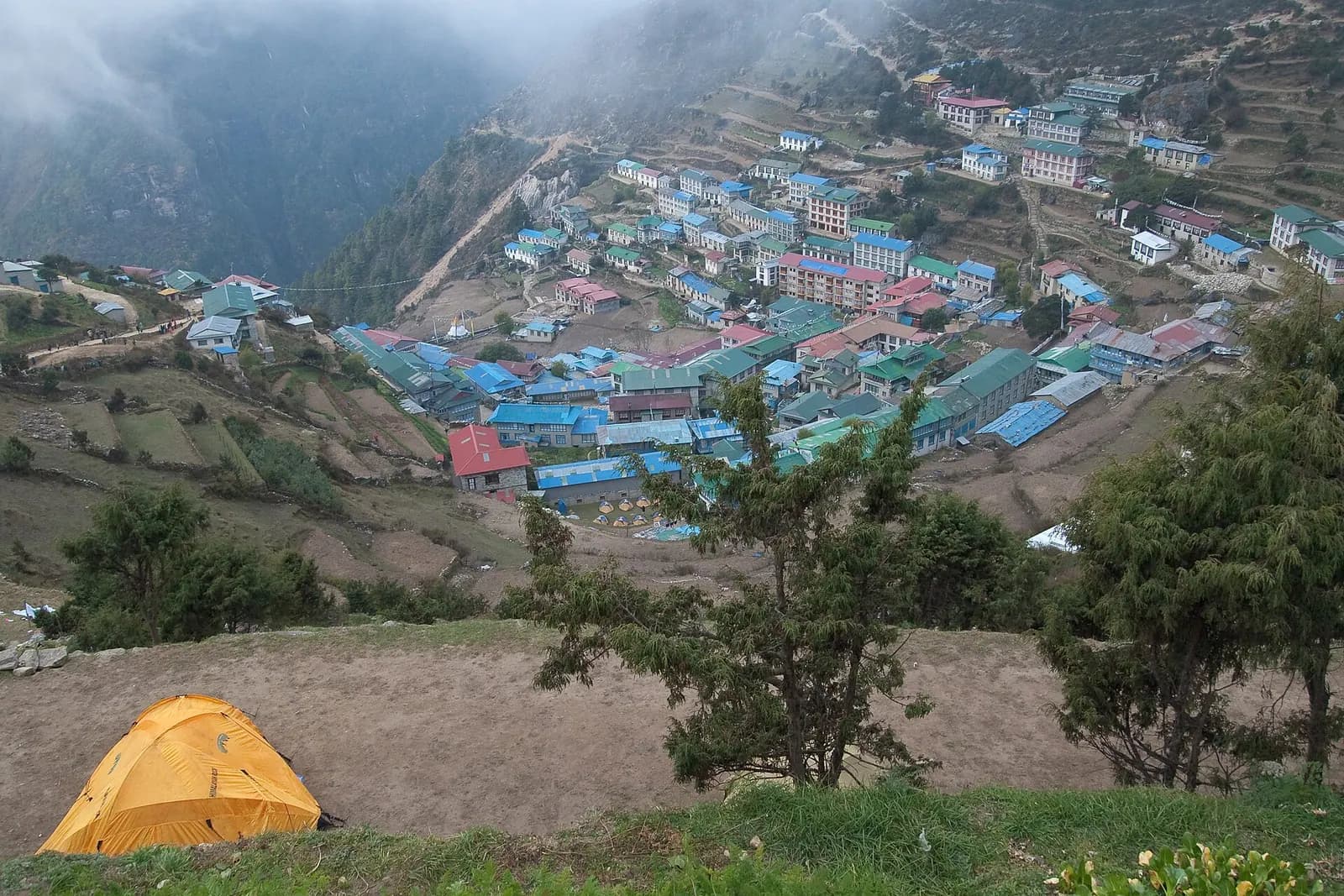
Photo: Vyacheslav Argenberg / CC BY 4.0
Quick Summary
TL;DR - Key Takeaways
- The medical guideline that matters is sleeping altitude, not the altitude you touch during the day. Above 3,000 m the Wilderness Medical Society recommends raising your sleeping elevation by no more than 500 m per night, with a rest night every three to four days.
- Measured against that limit, the standard 12-day Everest Base Camp itinerary exceeds 500 m on three nights: Phakding to Namche Bazaar at 830 m, Tengboche to Dingboche at 550 m, and Dingboche to Lobuche at 530 m.
- It passes the other half of the guideline. Two rest nights fall at the right spacing, and no 1,000 m block of sleeping gain goes without one.
- Kala Patthar at 5,545 m and Everest Base Camp itself at 5,364 m are daytime highs. Your highest sleeping altitude on this route is Gorak Shep at 5,180 m, and that is the number your body acclimatizes to.
- The most protective feature of the itinerary is the descent. Day 9 drops 940 m from Gorak Shep to Pheriche, which is why most trekkers who feel unwell at Gorak Shep improve within a day.
Sleeping Altitude Is the Number, Not the Summit
Every Everest Base Camp itinerary you can book is published the same way: a list of villages, a walking time, and a headline altitude. That format hides the one variable altitude medicine actually cares about.
The Wilderness Medical Society's clinical practice guidelines for acute altitude illness, updated in 2024, put it plainly: because acclimatization is what protects you, the altitude you sleep at matters more than the altitude you reach while awake. You spend six to nine hours at your sleeping altitude with a lowered respiratory drive. You spend twenty minutes on a viewpoint.
The guideline itself has two halves, and they are easy to confuse:
The daily limit. Above 3,000 m, do not increase your sleeping elevation by more than 500 m from one night to the next.
The rest cadence. Take a rest night, meaning no gain in sleeping elevation at all, every three to four days. A related formulation is one acclimatization day for every 1,000 m of sleeping gain.
An itinerary can pass one half and fail the other. The classic Everest Base Camp schedule does exactly that, and knowing which half it fails tells you where to put your attention.
The 12-Day Itinerary, Rewritten as Sleeping Altitudes
Below is the Everest Base Camp itinerary we publish, converted from villages into the numbers that matter. The gain column is the change in sleeping altitude from the previous night, not the total climbing you do during the day.
Read the gain column, not the altitude column. A night at 4,940 m after a night at 4,410 m is a different physiological event from a night at 4,940 m after a night at 4,900 m.
| Night | Sleep at | Altitude | Gain on previous night | Against the 500 m limit |
|---|---|---|---|---|
| 1 | Phakding | 2,610 m | First night on the trail | Below 3,000 m |
| 2 | Namche Bazaar | 3,440 m | +830 m | Exceeds |
| 3 | Namche Bazaar | 3,440 m | 0 m (rest night) | Rest night |
| 4 | Tengboche | 3,860 m | +420 m | Within limit |
| 5 | Dingboche | 4,410 m | +550 m | Exceeds |
| 6 | Dingboche | 4,410 m | 0 m (rest night) | Rest night |
| 7 | Lobuche | 4,940 m | +530 m | Exceeds |
| 8 | Gorak Shep | 5,180 m | +240 m | Within limit |
| 9 | Pheriche | 4,240 m | -940 m | Descent |
| 10 | Namche Bazaar | 3,440 m | -800 m | Descent |
| 11 | Lukla | 2,860 m | -580 m | Descent |
Three Nights Exceed the Limit, and They Are Not Equal
Phakding to Namche Bazaar, +830 m. The largest single jump on the route, and the one that gets the least attention because it happens early and at a modest absolute altitude. It also carries you from below 3,000 m to well above it in one day. The itinerary answers it correctly with a full rest night at Namche, which is why this jump rarely causes trouble despite being the biggest. Do not treat the Namche rest day as a shopping day you can skip to save time.
Tengboche to Dingboche, +550 m. Fifty metres over the limit, at an altitude where the margin is thinner. Again followed by a rest night, and again the rest night is the reason it works.
Dingboche to Lobuche, +530 m. This is the one to watch. It is the only exceedance on the route that is not followed by a rest night. You sleep at 4,940 m and then continue to 5,180 m the next night. If a headache starts anywhere on this trek, this is the leg where it usually starts.
It is worth being precise about what an exceedance means. It is not a prediction that you will get sick. It is a statement that the itinerary is ascending faster than the rate at which the average person acclimatizes, so the margin absorbing individual variation is smaller on those nights than on the others.
Note also what the itinerary does not get wrong. Day 1 flies you into Lukla at 2,860 m and then walks you down to sleep at Phakding at 2,610 m. Sleeping lower than the altitude you flew to is textbook practice, and it is deliberate.
Where the Itinerary Passes: Rest Cadence
The second half of the guideline asks for a rest night every three to four days, and an acclimatization day for every 1,000 m of sleeping gain. The 12-day schedule meets both.
The first rest night falls on night 3 at Namche. The second falls on night 6 at Dingboche, three nights later. From Namche at 3,440 m to Dingboche at 4,410 m is 970 m of sleeping gain, and it ends in a rest night. From Dingboche at 4,410 m to the highest sleeping altitude at Gorak Shep at 5,180 m is 770 m, also under 1,000 m.
So the honest summary is this. The itinerary is well shaped at the scale of weeks and slightly aggressive at the scale of individual nights. That is a very different problem from an itinerary that is simply too short, and it calls for a different response: not more days everywhere, but attention on specific legs.
Kala Patthar Is Not Your Sleeping Altitude
The headline altitude on this trek is 5,545 m, the top of Kala Patthar. Everest Base Camp itself sits at 5,364 m. Neither is a number your acclimatization is built around.
You reach both from Gorak Shep at 5,180 m and you return to Gorak Shep to sleep. Under the guideline, 5,180 m is your maximum acclimatization load. Climbing high and sleeping low is the oldest principle in altitude medicine, and days 8 and 9 of this itinerary are a textbook example of it, whether or not the operator selling you the trip describes it that way.
The practical consequence: if you are deciding whether to attempt Kala Patthar on a marginal morning, the decision is about cold, wind, footing and how you feel, not about acclimatization debt. The extra 365 m above Gorak Shep, held for half an hour, is not what will make you ill. The night at 5,180 m already did whatever it was going to do.
The corollary matters more. Feeling unwell at Gorak Shep is not a reason to push for the viewpoint and sort it out afterwards. It is a reason to descend.
Where Extra Nights Actually Help
If you are choosing between a 12-day and a longer itinerary, the useful question is not how many days, it is where the days go. Two extra nights spent in the wrong villages buy you very little.
The highest-value insertion is between Dingboche and Lobuche. This is the only over-limit night on the route with no rest night behind it. An extra night at Dingboche, or a night at Pheriche at 4,240 m before continuing, breaks the sequence of two consecutive gains at the altitude where the air is thinnest.
The second-highest is a third night at Namche. It costs a day at a comfortable altitude with real food and a bakery, and it deepens the acclimatization that everything above depends on.
Contingency days are a separate budget. Lukla flights are weather-dependent and delays are routine, so the standard advice is to hold two to three spare days against your international flight. Do not count those as acclimatization days. They are not in the mountains with you, and a day stuck in Kathmandu at 1,338 m does nothing for your red cells. Our Lukla flight guide covers how those delays actually behave.
A rest day is not a day off. The correct use of a rest night at Namche or Dingboche is an acclimatization walk to a higher point and a return to sleep low, not a day in a sleeping bag. Both villages have a standard hike for exactly this purpose.
What to Do With This on the Trail
The chart tells you where the pressure points are. It does not tell you how your body is responding, and no itinerary can. Two things close that gap.
Score yourself, twice a day, from Namche upward. The Lake Louise Score is the standard self-assessment and takes under a minute. Diagnosis needs a headache plus a total of three points or more. Our Lake Louise Score guide has the full scoring table. Do it in the morning and again in the evening, and write the number down, because the trend across days is more informative than any single score.
Treat the three flagged nights as monitoring nights. After arriving at Namche, at Dingboche and at Lobuche, take the score seriously rather than talking yourself out of a headache because the group is moving on tomorrow.
If your score reaches 3 to 5, stop ascending and hold your altitude. If it reaches 6 or more, or if you cannot walk a straight line, descend. On this route descent is unusually easy to arrange, because the trail drops fast: 940 m from Gorak Shep to Pheriche in a single day, and Pheriche has a seasonal aid post. That built-in descent is the itinerary's real safety margin.
Acetazolamide is an option worth discussing with a doctor before you travel rather than a decision to make at 4,940 m. Our Diamox guide covers dosing and what it does and does not do. It speeds acclimatization. It does not license a faster ascent.
TrekGuard tracks your sleeping altitude across the trek and flags the nights where your gain runs past the guideline, using your recorded altitude rather than the plan you booked. Weather closures, a strong day, a slow day and an unplanned village change all move the real numbers away from the printed itinerary, and the printed itinerary is the one everyone keeps checking. You can see the full route profile on the Everest Base Camp route page and the gear list it generates on the Everest Base Camp checklist.
Frequently Asked Questions
Is the 12-day Everest Base Camp itinerary safe?
It is the most widely walked schedule on the route and the great majority of trekkers complete it without serious altitude illness. Measured against the Wilderness Medical Society guideline it exceeds the 500 m nightly sleeping-gain limit three times, at Namche Bazaar, Dingboche and Lobuche, while meeting the recommended rest-day cadence. The exceedance without a rest night behind it is Dingboche to Lobuche, so that is the leg to monitor most closely.
What is the highest altitude I sleep at on the Everest Base Camp trek?
Gorak Shep at 5,180 m. Everest Base Camp at 5,364 m and Kala Patthar at 5,545 m are both visited during the day and you return to Gorak Shep to sleep. Because acclimatization is driven by sleeping altitude rather than peak daytime altitude, 5,180 m is the figure to plan around.
Should I add days to the standard Everest Base Camp itinerary?
If you add nights, the highest-value place is between Dingboche and Lobuche, because that is the only over-limit night on the route without a rest night following it. A third night at Namche is the next best. Keep contingency days for Lukla flight delays as a separate budget, since a day waiting in Kathmandu at 1,338 m contributes nothing to acclimatization.
Does the Namche acclimatization day really matter?
Yes. The climb from Phakding at 2,610 m to Namche at 3,440 m is an 830 m gain, the largest single jump on the trek, and it takes you from below 3,000 m to well above it. The rest night at Namche is what makes that jump workable. Use it for an acclimatization walk to a higher point followed by a return to Namche to sleep, rather than as a full day of rest.
Why does the itinerary descend so far on day 9?
The drop from Gorak Shep at 5,180 m to Pheriche at 4,240 m is 940 m in one day. Descent is the definitive treatment for altitude illness, and this leg means that anyone who has been accumulating symptoms high on the route gets a large, fast reduction in altitude as a normal part of the schedule. Pheriche also has a seasonal aid post.